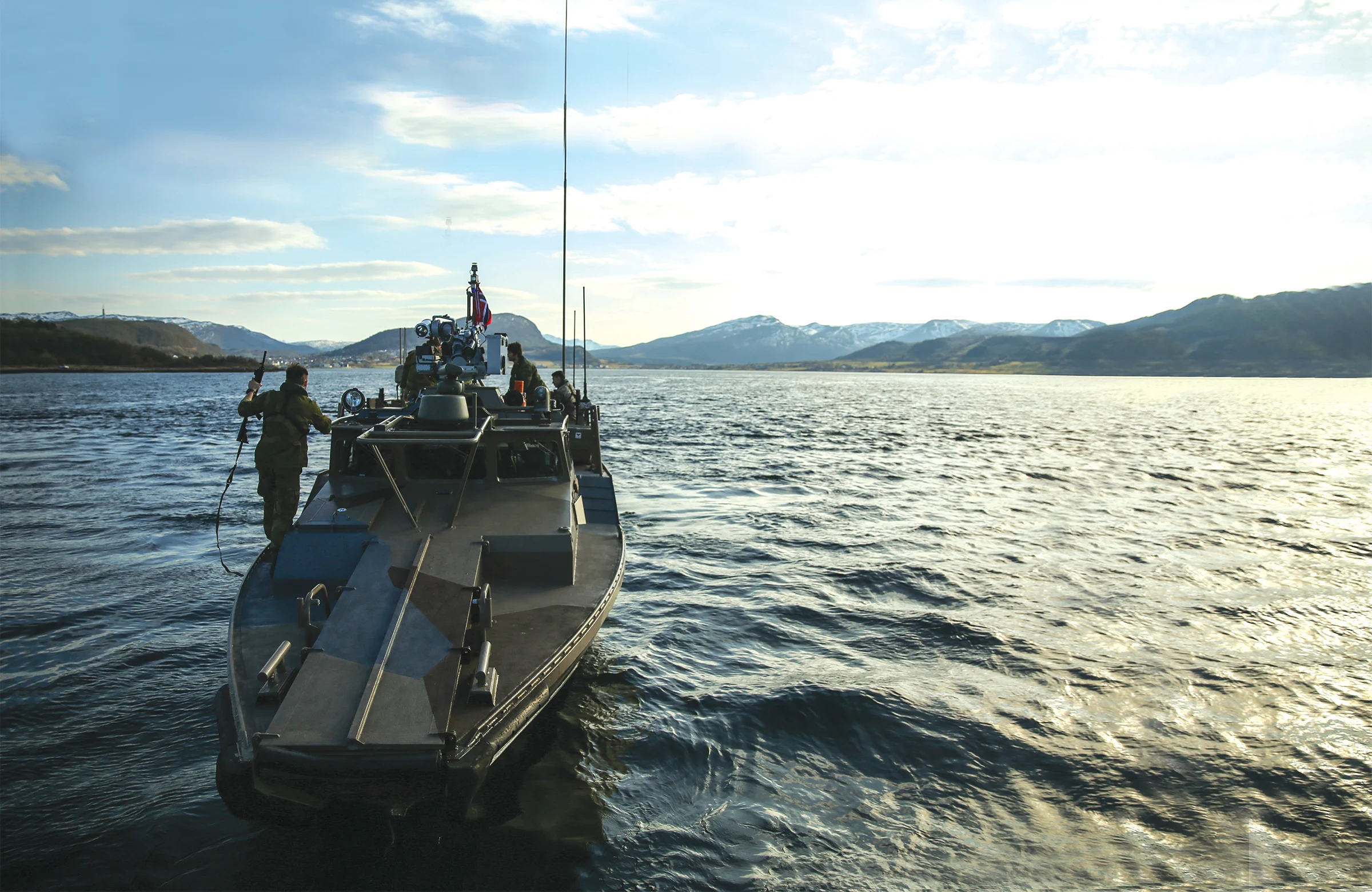
The Perilous Art of Small-Boat Landings on Rockall
I still remember the cold shiver that ran down my spine in the cutting room. We were reviewing the raw footage, the unedited rushes from the first reconnaissance trip, when the screen filled with a violent, shuddering jolt. Our rigid inflatable boat, a speck of orange against the infinite grey of the North Atlantic, rose sharply on a rogue swell and slammed its reinforced bow against the slick, barnacle-encrusted gash of Hasselwood Rock. The sound wasn’t the dull thud of fibreglass on water; it was a screeching, tearing groan of hypalon dragging across granite. In that moment, watching the coxswain fight the wheel to prevent the propeller from being smashed to pieces, I questioned the very sanity of what we were attempting to document. The idea of stepping out of a violently lurching boat onto that vertical, guano-splattered tooth suddenly seemed less like an expedition and more like a negotiation with a very unforgiving sea.
Why Rockall Remains the Ultimate Test of Seamanship
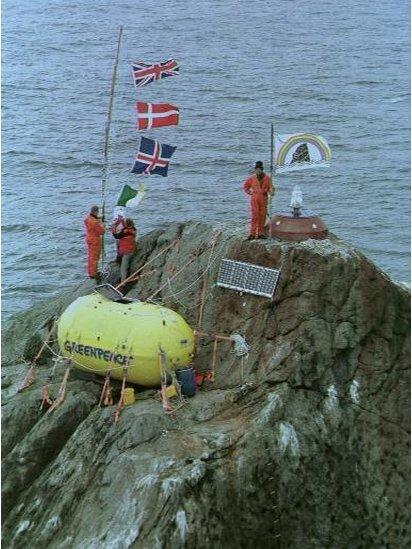
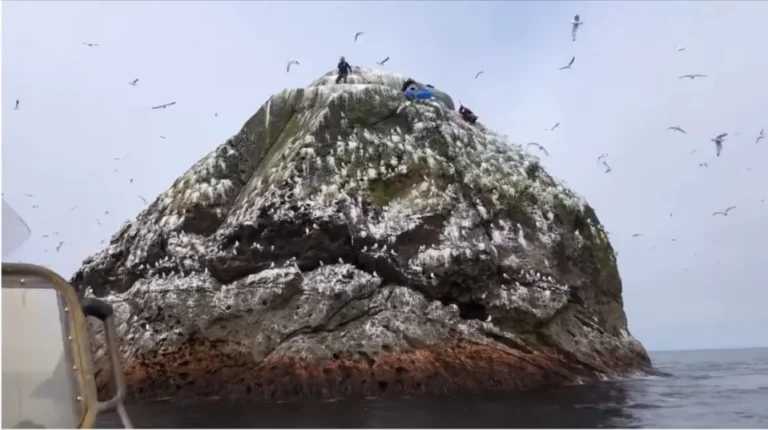
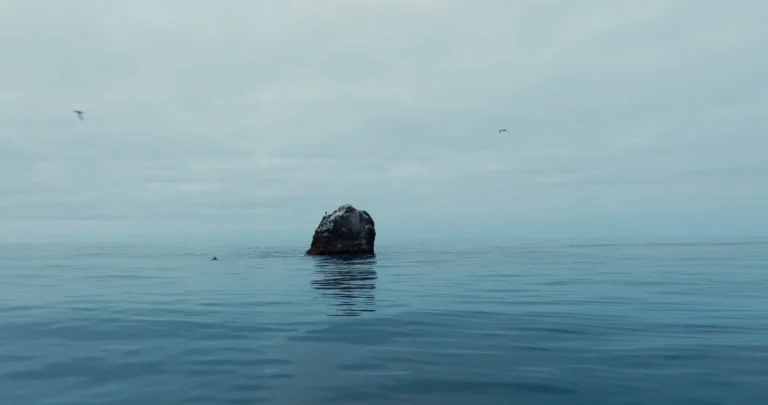
To understand the sheer audacity of a landing, you first must grasp the profound isolation of this place. Rockall is not merely a remote island; it is a defiant geological aberration thrusting out of the deep Atlantic abyss. It is the eroded core of an extinct volcano, sitting 260 nautical miles west of the Outer Hebrides. There is no continental shelf to soften the blow, no sheltered bay, and absolutely no mercy. The moment you leave the relative safety of St. Kilda behind, you are entirely committed to a passage that exposes you to the full, unchecked fury of the North Atlantic weather systems. For our documentary, capturing this journey wasn’t just about filming a rock; it was about documenting a vanishing breed of seamanship where a single error in judgement carries immediate, irrevocable consequences.
The exposed location and the Atlantic fetch
The terror of Rockall is magnified by the concept of ‘fetch’—the uninterrupted distance over which wind can blow to generate waves. Here, the fetch stretches thousands of miles, all the way to the coast of North America. This generates a chaotic sea state that is entirely different from coastal waters. Swells march in from multiple directions simultaneously, creating pyramidal peaks that can break without warning. During our filming window, we observed the sea transition from a glassy calm to a fully developed gale in less than forty minutes. The vessel constantly rolled through arcs of 30 degrees or more, making even standing upright a full-body workout. This constant, violent motion is the primary antagonist of any Rockall documentary; it is the invisible hand that decides whether the camera rolls or the crew simply clings to the handrails, staring at the horizon to stave off the sickness that threatens to debilitate even the saltiest sailors.
Hasselwood Rock: The submerged sentinel
Lurking just to the north of the main pinnacle lies a menace that has claimed countless vessels and nearly ended our own expedition before it began: Hasselwood Rock. This granite skerry is often completely awash, hidden just beneath the surface or revealing itself only by a violent churn of white water. In calmer conditions, it looks deceptively harmless, a gentle frothing patch. But when a 4-metre swell rolls in, Hasselwood becomes a hydraulic meat grinder. We witnessed the sea detonate against it, sending plumes of spray high into the air with a percussive boom that we felt in our chests. Navigating the channel between the main stack and this submerged sentinel required absolute precision. Get it wrong, and the current drags a boat onto the pinnacle, holing the hull instantly and spilling the crew into water that hovers around 12 degrees Celsius year-round, where survival time is measured in minutes, not hours.
The Mechanics of a ‘Touch-and-Go’ Landing
Landing on Rockall is not a beach disembarkation; it is a military-style amphibious assault on a vertical fortress. There is no tying up, no gentle step ashore. The technique is known as a ‘touch-and-go’, and it is the most dangerous ballet a coxswain and a landing party can perform. The objective is to kiss the rock with the bow of the RIB just long enough for a climber to transfer their weight onto the rock, get a secure grip, and climb clear, all before the receding wave pulls the boat away and drops it onto the jagged lower ledges. Our team spent months studying the techniques pioneered by veteran Rockall expedition leader Nick Hancock, who had perfected this dance during his record-setting solo occupation of Rockall in 2014. His logs taught us that brute force is useless here; only rhythm and finesse keep you alive.
Reading the swell period and wave refraction
The difference between a successful landing and a medical evacuation lies in the coxswain’s ability to read the swell period. A longer period swell, say 14 to 16 seconds, offers a predictable rise and fall, allowing the boat to hover gently against the landing ledge, Hall’s Ledge, at the top of the surge. A shorter, steeper period, anything under 10 seconds, turns the water into a washing machine of reflected waves. Nick Hancock taught us to watch for ‘wave refraction’—the way swells wrap around the rock and collide on the far side, creating a sudden, violent upsurge. We had to time our approach so that the boat arrived on the peak of the swell, not the trough. Arrive in the trough, and the granite ceiling above you comes crashing down; arrive on the peak, and you are lifted gracefully, eye-to-eye with the barnacles, ready to step off as if alighting from an escalator.
The critical role of the RIB coxswain
The coxswain is the absolute master of this chaos. They must hold the boat within a six-inch tolerance zone, fighting the throttle and the wheel simultaneously to counteract the backwash. Too much throttle, and you ram the rock, crushing the bow and sending the landing party flying; too little, and the retreating wave sucks you sideways, exposing the broadside to the next breaker. Our coxswain described the experience as trying to park a car on a moving wall while a giant tries to sweep your legs away with a broom. The concentration required is total. There is no conversation, only the roar of the outboard and the coxswain’s eyes locked on the glistening rock, feeling the sea through the hull, waiting for that split-second window of relative calm to shout the command: “Go. Now. Go!”
Risk Assessment: When the Atlantic Wins
In the cutting room, we had to make a conscious decision not to sanitise the danger. The raw footage showed moments where the Atlantic won. We are not talking about getting wet; we are talking about the sickening crunch of gelcoat against granite and the near-miss where a crew member’s leg was momentarily trapped between the gunwale and the rock. In this environment, a crushed limb is not just an injury; it is a death sentence. The risk assessment document for this shoot was thicker than the script, and it made for chilling reading. It forced us to confront the reality that if a serious head injury or compound fracture occurred, the cavalry was not coming. We were operating in a zone where self-rescue was the only option, a stark reality that defines the ‘Edge of Existence’ trailer.
The ‘golden hour’ problem and medical evacuation
In trauma medicine, the ‘golden hour’ is the critical window for definitive surgical intervention. At Rockall, that concept is a fantasy. The fastest all-weather lifeboat or coastguard helicopter cannot reach the islet within that timeframe. Even if a helicopter scrambled from Stornoway, the transit time, plus the difficulty of winching from a vertical rock in Atlantic winds, pushes the response time far beyond survivable limits for catastrophic bleeding. The Royal National Lifeboat Institution (RNLI) operates within operational limits, and a rescue 260 nautical miles offshore represents an extreme logistical challenge, heavily dependent on weather windows and the availability of long-range assets. We knew that calling for help would essentially be a recovery operation, not a rescue. That psychological burden weighed heavily on every decision we made in the splash zone.
Case study: Failed attempts and crushed boats
We didn’t have to look far into the archives to find humbling lessons. The history of Rockall is littered with failed attempts. We studied reports of expeditions where the landing party was forced to turn back after days of waiting, the weather window slamming shut. More sobering were the accounts of crushed boats. We saw photographs of RIBs with their tubes shredded, floating limply next to the rock, their crews lucky to have scrambled onto the rock with their lives but now stranded on a barren islet with a destroyed means of escape. One specific incident involved a wave slamming a tender against the cliff, shattering the outboard engine’s lower unit and holing three of the air compartments. These weren’t just stories; they were blueprints of what not to do, and they informed the extensive modifications we made to our own vessels.
Kit and Preparation: Engineering Survival
We quickly learned that you cannot out-brave the Atlantic; you have to out-engineer it. The kit list for a Rockall landing is a testament to the difference between adventure and suicide. Every piece of equipment had to serve a dual purpose: keeping us alive in the water and protecting us from the abrasive, knife-edge granite. We were not just documentary filmmakers; we were a waterborne safety operation, and our reliance on top-tier marine equipment was absolute. Much of our critical safety setup was sourced through specialist marine equipment suppliers based in Lymington, a hub of British yachting expertise. The standards demanded by these chandlers—the stitching on the drysuits, the welding on the inflatable collars—were the thin lines between a successful shoot and a tragedy.
Personal protective equipment for the splash zone
The uniform for the landing party looked more like a bomb disposal squad than a film crew. We wore heavy-duty neoprene drysuits with reinforced knees and elbows, not for warmth primarily, but for puncture resistance. Underneath, impact-absorbing base layers protected the ribs and spine. A helmet was non-negotiable, not just for falling rocks, but for the risk of the head snapping back against the boat’s A-frame during a sudden lurch. We used auto-inflating lifejackets with integrated spray hoods and PLBs (Personal Locator Beacons) strapped directly to the chest. The boots were the most critical item; thick-soled, with aggressive grip to find purchase on the slick, kelp-covered ledges. One slip meant a plunge into the maelstrom between the boat and the cliff, a place where no amount of buoyancy would save you from being crushed.
Vessel modifications for granite contact
A standard off-the-shelf RIB would not survive a single season of Rockall landings. Our primary tender underwent significant modifications. The hypalon tubes were fitted with sacrificial wear patches—multiple layers of heavy-duty material glued and taped along the bow contact points. We installed a reinforced, bolt-on stainless steel bow plate that acted as a fender, allowing the coxswain to gently nudge the rock without immediately tearing the fabric. The engine was fitted with a heavy-duty skeg guard, and we carried a spare propeller bolted to the transom, ready for a lightning-fast change at sea. These modifications, inspired by the heavy-duty workboats used in Scottish fish farms, transformed the boat from a fragile inflatable into a resilient bumper car capable of absorbing the inevitable impacts of a touch-and-go landing.
The Psychological Edge in the Splash Zone
For all the technical gear and boat modifications, the final ingredient was entirely human. The moment the boat enters the splash zone—that chaotic cauldron of white water at the base of the rock—physiology rebels against psychology. The body dumps adrenaline into the system, fine motor skills vanish, and tunnel vision narrows your world to the immediate threat. Filming this for the ‘Edge of Existence’ documentary meant we had to control that panic, not just to survive, but to operate cameras and capture the moment. We discovered that the mental game was far harder than the physical one; the ability to slow your breathing while a wall of green water rises beside you is a skill that can only be honed through brutal, repetitive exposure.
Overcoming hesitation at the threshold
Hesitation kills. It is a simple, brutal axiom of small-boat landings. As the boat rises on the swell and the rock comes within reach, a natural human instinct screams at you to wait for a better, calmer moment. That moment never comes. We trained our team to commit fully the instant the coxswain gave the signal. The psychological technique we used was borrowed from the military: a silent, three-second countdown in the mind, bypassing the conscious fear. If you hesitate, you end up half-committed as the boat drops away, leaving you straddling a widening gap or, worse, falling into it. The footage shows our climber launching himself with a deliberate, almost aggressive lunge, trusting the friction of the granite to stick him to the wall. That trust had to override the very loud voice in his head screaming that the rock was too slippery and the drop was too far.
Trust and communication between crew members
In the roar of the engine and the hiss of the spray, verbal communication is impossible. The relationship between the coxswain and the landing party became almost telepathic. It was a language of head nods, eye contact, and the subtle feel of the boat’s movement. The coxswain had to trust that the climber would move precisely when told, without looking back. The climber had to trust that the coxswain would not gun the throttle and leave him stranded, or worse, push the boat onto his fingers. Building that trust took weeks of practice in less demanding conditions, slowly building up the sea state. We debriefed every single approach, often reviewing the footage frame-by-frame to synchronise our movements. That unshakeable bond, that knowledge that your crewmate will hold their nerve when a 4-metre swell lifts the stern, is the only thing that makes the impossible step possible.
Ultimately, no amount of satellite navigation, Kevlar reinforcement, or weather forecasting software changes the fundamental reality of stepping onto Rockall. It remains a deeply human negotiation with raw oceanic power. The technology might get you there faster and keep you a little safer, but the final act—the transfer of a fragile body from a synthetic boat onto a 50-million-year-old granite fang—is a primal moment of commitment. That terrifying, beautiful, and utterly irrational human impulse to touch the void is the very essence of what we set out to capture. It is the central theme that pulses through every frame of the ‘Edge of Existence’ trailer, a reminder that some edges are not meant to be conquered, only briefly, and humbly, visited.
FAQ
Why is landing on Rockall considered so dangerous?
The danger stems from a combination of extreme isolation, 260 nautical miles from the Outer Hebrides, and the complete lack of shelter. The North Atlantic swell hits the rock unimpeded, creating a violent surge that smashes boats against the granite. The submerged Hasselwood Rock to the north adds a lethal navigational hazard, while the cold water temperature means survival time is severely limited if you fall in.
What is a ‘touch-and-go’ landing technique?
A touch-and-go is a high-risk manoeuvre where the bow of a RIB briefly makes contact with Rockall’s ledge at the peak of a swell. The landing party must disembark within a one or two-second window before the wave recedes, dragging the boat away. It requires precise timing from the coxswain to avoid crushing the boat or leaving a crew member stranded in the water.
How did Nick Hancock influence this documentary?
Nick Hancock, who holds the record for a solo occupation of Rockall in 2014, provided invaluable expertise on reading the swell period and wave refraction. His detailed logs and personal advice taught our team the subtle rhythms of the rock, helping us understand the specific timing required to approach Hall’s Ledge without sustaining damage to the vessel.
Can the RNLI rescue you if something goes wrong at Rockall?
While the Royal National Lifeboat Institution (RNLI) is a world-class service, a rescue at Rockall is an extreme logistical challenge. The transit time from the nearest station exceeds the ‘golden hour’ required for treating catastrophic trauma. A medical evacuation relies entirely on a long-range helicopter being available and a stable weather window, which is rare. Our team operated with the understanding that self-rescue was the primary survival plan.
What specialist equipment is needed to film on the rock?
We relied on heavy-duty drysuits with reinforced panels, impact-rated helmets, and auto-inflating lifejackets with integrated PLBs. The RIBs were fitted with sacrificial wear patches and stainless steel bow plates to withstand granite contact. Much of this specialist marine safety gear was sourced to exacting standards from chandlery suppliers based in Lymington, ensuring it could handle the abrasive conditions of the splash zone.