Blog

  • The 1955 annexation and what followed

    The 1955 Annexation and What Followed: A Surreal Claim to a Barren Rock

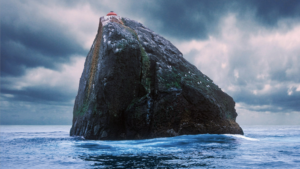
    Picture the scene: a Royal Marines sergeant, balancing on a slippery granite tooth jutting from the North Atlantic, 230 miles west of the Outer Hebrides, cementing a brass plaque and a Union Jack into a rock face while waves threaten to wash him into oblivion. It reads like a Monty Python sketch written by the Colonial Office, yet this moment of pure imperial theatre actually happened. Was it a stroke of strategic genius securing seabed rights worth billions, or merely the most farcical footnote in British maritime history? Our team has spent years unravelling this question, and what we discovered is a story far stranger than any official record suggests.

    The Final Territorial Grab of the British Empire

    By 1955, Britain’s empire was in rapid retreat. India was gone, Suez was simmering, and the Union Jack was being lowered across the globe. Yet in the dying embers of imperial ambition, the Admiralty fixed its gaze on a speck of rock no larger than a modest tennis court. The mission was simple on paper: get there, claim it, and get off before the weather turns. The reality involved a helicopter, a destroyer, and a team of Royal Marines who probably wondered what they’d done to deserve such a posting.

    Operation Hotfoot, led by Lieutenant Commander Desmond Scott, unfolded on 18 September 1955. A helicopter from HMS Vidal deposited four Royal Marines onto the summit. Sergeant Brian Peel cemented the plaque into the rock face and raised the flag. The landing was a logistical nightmare; the rock is sheer-sided, constantly lashed by spray, and offers no natural shelter. One misstep meant a plunge into the freezing Atlantic. The plaque declared the rock was being claimed “in the name of Her Majesty Queen Elizabeth II,” a pronouncement that must have sounded wonderfully grandiose to the gulls.

    Geologically, Rockall is an isolated chunk of peralkaline granite, the eroded core of an extinct volcano. It’s a geological orphan, not part of any larger landmass. The urgency to claim it wasn’t about the rock itself—it’s utterly barren—but about the empty water surrounding it. The Ministry of Defence feared Soviet spy trawlers lurking in the North Atlantic, and there was a very real concern that a hostile power might use the rock to contest British control of the surrounding sea lanes. It was a pre-emptive strike driven by Cold War paranoia.

    From Greenpeace to the UN: The Sovereignty Saga Unfolds

    For two decades, the plaque sat undisturbed, battered by storms and ignored by the world. Then the fish ran out elsewhere. As fishing fleets pushed further into the Atlantic, the question of who owned the waters around Rockall became a multi-million-pound dispute. The Cod Wars with Iceland had already shown how vicious disputes over fishing grounds could become. The introduction of the 200-nautical-mile Exclusive Economic Zone under the United Nations Convention on the Law of the Sea changed everything. If Rockall was a fully fledged island capable of sustaining human habitation, it could generate a massive territorial claim. The UK, recognizing the legal vulnerability, ratified the treaty but immediately declared that Rockall would no longer be used to establish fishing rights.

    No chapter in the Rockall story is quite as unhinged as the 1997 occupation by Greenpeace. Activists landed on the rock, declared it the independent micronation of “Waveland,” and offered citizenship to anyone who pledged allegiance online. Their goal was to protest oil exploration in the Atlantic Frontier. They installed a solar-powered beacon and broadcast a looped message declaring sovereignty. For 42 days, they held out against the elements, proving that while Rockall might be uninhabitable, it wasn’t un-occupiable for a very determined, very seasick activist with a good supply of dry bags.

    Our ‘Edge of Existence’ Trailer: Capturing the Isolation

    When we set out to make this Rockall documentary, we knew standard talking-head interviews wouldn’t cut it. We needed to make the audience feel the salt spray, the vertigo, and the sheer psychological weight of standing on that rock. Our trailer, which you can watch here on the site, leans heavily on a visceral, sensory reconstruction of the 1955 landing. We wanted to bottle the claustrophobia of a helicopter hovering over a spike in the middle of nowhere.

    We worked with visual effects artists and used digitized archival footage from the Imperial War Museum, compositing actors against a 3D-scan of the rock. The sound design is deliberately oppressive; we stripped back the music to let the groan of the sea and the whine of the rotor blades dominate. You can see the strain on the Marines’ faces as they scramble onto the wet granite. We called the film “Edge of Existence” not just because Rockall sits at the edge of the map, but because the men who went there were operating at the extreme limit of human endurance. The title also nods to the legal limbo the rock occupies.

    The Legal Wrangle: Is the Claim Even Watertight?

    You might assume planting a flag and sticking a plaque on a rock settles the matter. You’d be wrong. The legality of the 1955 annexation has been quietly contested for decades. The core issue is whether Rockall is an island in the legal sense, and Britain’s closest neighbours have never been shy about voicing their skepticism. The Republic of Ireland’s ongoing objection is the most significant thorn in the UK’s side. Dublin has never recognized British sovereignty over Rockall, arguing that the rock is too small and uninhabitable to generate a continental shelf claim. This directly impacts the delineation of seabed rights for potential oil and gas reserves.

    To bolster the legal argument that Rockall is habitable, former Conservative minister Lord Mackay of Ardbrecknish spent a night on the rock in 1985. He endured a sleepless, spray-lashed night in a survival capsule bolted to the granite. The Island of Rockall Act 1972 had formally incorporated the rock into the United Kingdom, specifically into the administrative area of the Isle of Harris in Scotland, but the act was largely symbolic. Mackay’s uncomfortable sleepover was a direct attempt to prove that human habitation was possible, a legal box-ticking exercise conducted at the mercy of a North Atlantic gale.

    Why a Lifeless Rock Still Captures the British Imagination

    There is no treasure on Rockall. No oil gushes from its cracks. No one can live there. Yet the psychological pull of the place is magnetic. It represents the last full stop of the British Isles, a final defiant piece of land before the vast emptiness of the Atlantic. It’s a blank canvas onto which we project our national obsessions with endurance, eccentricity, and the sea.

    From the St Kilda mailboats to modern adventurers like Nick Hancock, who spent 45 days alone on the rock in 2014 breaking the solo occupation record, the madness persists. Our documentary explores this strange drive. We interviewed psychologists and adventurers, and the consensus is that Rockall is the ultimate test of the “because it’s there” mentality. It’s a monument to a very specific kind of British stubbornness, and our film treats it not as a punchline, but as a profound piece of our national character.

    The 1955 annexation wasn’t just a legal checkbox ticked by a fading empire; it was the starting pistol for a 70-year comedy-drama of ego, ecology, and nationalism. Our Rockall documentary, “Edge of Existence,” brings this surreal saga to life, and we think you’ll never look at a map of the North Atlantic the same way again.

    Frequently Asked Questions

    Here are the most common questions we receive about the Rockall documentary and the annexation story:

    • Is the Rockall documentary trailer available to watch online? Yes, the full trailer for “Edge of Existence” is available right here on rockalldoc.com. We’ve also included a short behind-the-scenes featurette showing how we reconstructed the 1955 Royal Marines landing using archival footage and visual effects.
    • Did the Greenpeace occupation of Rockall actually change anything? The 1997 occupation didn’t change the legal status of the rock, but it successfully drew global media attention to oil exploration in the Atlantic. It remains one of the most effective publicity stunts in environmental campaigning history and forced a wider conversation about marine ecosystem protection.
    • Why does the Republic of Ireland still object to the UK’s claim? The Republic of Ireland’s objection is based on the UNCLOS definition of an island. Dublin argues that because Rockall is uninhabitable and cannot sustain economic life of its own, it should not be used to generate a continental shelf claim. This affects the division of potential seabed resources in the Hatton-Rockall Basin.
    • What was the Island of Rockall Act 1972? The Island of Rockall Act 1972 was UK legislation passed to formally incorporate Rockall into the United Kingdom. Specifically, it made the rock part of the administrative district of the Isle of Harris in Scotland, closing any legal loopholes regarding the island’s status under British law.
    • Has anyone actually lived on Rockall? No one has ever permanently lived on Rockall. The longest continuous stay was by adventurer Nick Hancock, who spent 45 days alone on the rock in 2014 in a specially designed survival pod. Former minister Lord Mackay also spent a single night there in 1985 to support the legal argument that habitation was possible, though “surviving” is perhaps a more accurate term than “living.”

  • Survival records on the rock

    The Hardest Survival Records Set on Rockall

    There is no gentle arrival at Rockall. One moment you’re in a boat heaving on the grey swell, and the next you’re leaping onto a granite fang slick with guano and spray, knowing that if your fingers don’t find grip immediately, the North Atlantic will fold you under. That first step is the moment the abstract notion of a ‘survival record’ dissolves into something primal. Our documentary, Edge of Existence, plunges into this visceral reality, gathering the stories of those who voluntarily marooned themselves on Britain’s most isolated speck of land.

    Tom McClean: The Original Solo Occupier

    Before Rockall became a proving ground for eccentric endurance, it was just a shipping hazard. Tom McClean changed that in 1985. A former SAS soldier with a taste for extreme solitude, McClean bolted a survival pod to Hall’s Ledge and stayed for 40 days, establishing the benchmark for every occupation that followed. His was a military operation executed on a civilian whim, funded by sheer bloody-mindedness and a desire to reaffirm British sovereignty over the islet.

    McClean had already rowed solo across the Atlantic, but Rockall offered a different adversary: a static siege against the elements. His survival pod, a cylindrical steel capsule originally designed by the UK Ministry of Defence, became his world—a claustrophobic tube where he slept, cooked, and waited out the gales that routinely scrub the rock clean. Bolted directly into the granite, it was the only thing separating him from the abyss.

    Greenpeace’s Occupation and the Birth of Waveland

    If McClean’s occupation was stoic and solitary, Greenpeace’s arrival in 1997 was a carnival of political theatre. The activists lasted 42 days, beating McClean’s record by two days, but the real victory was a bizarre act of sovereignty. They declared Rockall the independent micronation of ‘Waveland’ and issued passports from their wave-lashed ledge, protesting oil drilling licences in the surrounding waters.

    The Waveland stunt turned physical endurance into a media spectacle. Activists raised a flag, broadcast radio messages, and invited citizenship applications from their perch. Meanwhile, the North Atlantic delivered its full fury. Their fibreglass pod shuddered under storm-force waves, and their greatest fear wasn’t being washed away but having fresh water contaminated by salt spray—a slow death sentence on a rock with zero natural resources.

    Nick Hancock’s Solo Endurance Record

    In 2014, Nick Hancock arrived with a different mission. He wasn’t claiming sovereignty or protesting policy; he was raising money for Help for Heroes and wrestling his own mind. Hancock shattered the Greenpeace record by staying 45 days alone on a rock smaller than a tennis court. Our documentary features never-before-seen footage from this record attempt, capturing the raw reality of a man slowly unspooling in total isolation.

    Hancock raised over £10,000 for wounded veterans, and every additional day translated into more donations—a self-imposed pressure that kept him anchored when every instinct screamed for extraction. The mental battle became a slow erosion of self. Hallucinations crept in, days bled together, and the constant roar of the sea became a malevolent voice. He developed coping mechanisms: elaborate mental games, one-sided conversations with gulls, and reading aloud from a waterproofed notebook just to hear a human voice.

    The Perilous Logistics of Long-Term Survival

    Surviving on Rockall isn’t about courage; it’s about logistics. Every occupation relies on the same brutal calculus: you bring everything, you store everything, and you pray the ocean doesn’t reclaim everything. There is no soil, no spring, and no natural shelter. The rock is a near-vertical tooth of granite offering a single sloping ledge as the only viable campsite.

    Water is the obsession. Occupiers bring sealed containers, but spray infiltrates everything—zips corrode, seals fail, and a single crack means brackish, undrinkable slurry. Survivors use multiple waterproof layers and sacrificial outer containers, but drinking water eventually tastes faintly of the sea no matter how well you protect it. Then there are the rogue waves. Hall’s Ledge sits roughly four metres above typical sea level, but monstrous walls of water can sweep the ledge without warning. Both McClean and Hancock described the same terror: a sudden darkening of the porthole, a freight-train roar, and an impact that makes the granite itself tremble.

    Our Documentary’s Take on the Edge of Existence

    When our team set out to make the definitive Rockall documentary, we knew we couldn’t tell these stories from a studio. Edge of Existence is the culmination of years of research, maritime logistics, and a fair bit of terror. We secured unprecedented access to the key figures. Tom McClean, now in his eighties, shared details about the psychological aftermath of his 40 days. Nick Hancock walked us through his personal diaries. We even tracked down former Waveland ‘citizens’ who described the strange camaraderie of a protest that became a survival epic.

    Our trailer offers a bracing first look. It opens with a drone shot of the rock emerging from a grey squall, then cuts to handheld footage from the ledge as a storm builds. You will see the survival pod shuddering under a direct hit, hear the wind screaming, and watch a tiny human figure clinging to a safety line. This is not a polished teaser; it is a glimpse into the genuine fury of the Rockall sea area.

    The survival records set on Rockall are measured in days, but the true record is something invisible: the permanent shift in perspective etched into every person who has stepped onto that granite and stepped off changed. Their stories, captured in Edge of Existence, remind us that the edge is not just a place—it is a state of mind that recalibrates everything you thought you knew about your own limits.

    FAQ

    Has anyone ever lived on Rockall permanently?

    No. Rockall has never supported permanent habitation. Every occupation has been a temporary endurance stunt or protest, lasting weeks rather than months. The rock offers no fresh water, no soil, and no natural shelter, making permanent settlement impossible with current technology.

    Why is Rockall so dangerous to land on?

    Rockall is a sheer granite pinnacle rising from the open Atlantic. The only landing point is Hall’s Ledge, a sloping shelf that becomes lethally slippery when wet. Swells can appear without warning, and rogue waves have been known to sweep the ledge entirely. The nearest land is over 230 miles away, meaning rescue is never immediate.

    What is the current record for staying on Rockall?

    Nick Hancock holds the current solo occupation record of 45 days, set in 2014. The longest occupation overall was a 42-day stay by Greenpeace activists in 1997, though this was a team effort rather than a solo feat.

    Does the UK still claim sovereignty over Rockall?

    Yes, the United Kingdom formally annexed Rockall in 1955 and incorporated it into Scotland in 1972. However, the rock’s status as an exclusive economic zone has been disputed by Ireland, Iceland, and Denmark, making it a continuing point of diplomatic tension.

    Where can I watch the Rockall documentary trailer?

    Our trailer for Edge of Existence is available now on our website. It features never-before-seen footage from the 2014 record attempt and exclusive previews of our interviews with the surviving record holders.

  • Small-boat landings: seamanship and risk

    The Perilous Art of Small-Boat Landings on Rockall

    I still remember the cold shiver that ran down my spine in the cutting room. We were reviewing the raw footage, the unedited rushes from the first reconnaissance trip, when the screen filled with a violent, shuddering jolt. Our rigid inflatable boat, a speck of orange against the infinite grey of the North Atlantic, rose sharply on a rogue swell and slammed its reinforced bow against the slick, barnacle-encrusted gash of Hasselwood Rock. The sound wasn’t the dull thud of fibreglass on water; it was a screeching, tearing groan of hypalon dragging across granite. In that moment, watching the coxswain fight the wheel to prevent the propeller from being smashed to pieces, I questioned the very sanity of what we were attempting to document. The idea of stepping out of a violently lurching boat onto that vertical, guano-splattered tooth suddenly seemed less like an expedition and more like a negotiation with a very unforgiving sea.

    Why Rockall Remains the Ultimate Test of Seamanship

    To understand the sheer audacity of a landing, you first must grasp the profound isolation of this place. Rockall is not merely a remote island; it is a defiant geological aberration thrusting out of the deep Atlantic abyss. It is the eroded core of an extinct volcano, sitting 260 nautical miles west of the Outer Hebrides. There is no continental shelf to soften the blow, no sheltered bay, and absolutely no mercy. The moment you leave the relative safety of St. Kilda behind, you are entirely committed to a passage that exposes you to the full, unchecked fury of the North Atlantic weather systems. For our documentary, capturing this journey wasn’t just about filming a rock; it was about documenting a vanishing breed of seamanship where a single error in judgement carries immediate, irrevocable consequences.

    The exposed location and the Atlantic fetch

    The terror of Rockall is magnified by the concept of ‘fetch’—the uninterrupted distance over which wind can blow to generate waves. Here, the fetch stretches thousands of miles, all the way to the coast of North America. This generates a chaotic sea state that is entirely different from coastal waters. Swells march in from multiple directions simultaneously, creating pyramidal peaks that can break without warning. During our filming window, we observed the sea transition from a glassy calm to a fully developed gale in less than forty minutes. The vessel constantly rolled through arcs of 30 degrees or more, making even standing upright a full-body workout. This constant, violent motion is the primary antagonist of any Rockall documentary; it is the invisible hand that decides whether the camera rolls or the crew simply clings to the handrails, staring at the horizon to stave off the sickness that threatens to debilitate even the saltiest sailors.

    Hasselwood Rock: The submerged sentinel

    Lurking just to the north of the main pinnacle lies a menace that has claimed countless vessels and nearly ended our own expedition before it began: Hasselwood Rock. This granite skerry is often completely awash, hidden just beneath the surface or revealing itself only by a violent churn of white water. In calmer conditions, it looks deceptively harmless, a gentle frothing patch. But when a 4-metre swell rolls in, Hasselwood becomes a hydraulic meat grinder. We witnessed the sea detonate against it, sending plumes of spray high into the air with a percussive boom that we felt in our chests. Navigating the channel between the main stack and this submerged sentinel required absolute precision. Get it wrong, and the current drags a boat onto the pinnacle, holing the hull instantly and spilling the crew into water that hovers around 12 degrees Celsius year-round, where survival time is measured in minutes, not hours.

    The Mechanics of a ‘Touch-and-Go’ Landing

    Landing on Rockall is not a beach disembarkation; it is a military-style amphibious assault on a vertical fortress. There is no tying up, no gentle step ashore. The technique is known as a ‘touch-and-go’, and it is the most dangerous ballet a coxswain and a landing party can perform. The objective is to kiss the rock with the bow of the RIB just long enough for a climber to transfer their weight onto the rock, get a secure grip, and climb clear, all before the receding wave pulls the boat away and drops it onto the jagged lower ledges. Our team spent months studying the techniques pioneered by veteran Rockall expedition leader Nick Hancock, who had perfected this dance during his record-setting solo occupation of Rockall in 2014. His logs taught us that brute force is useless here; only rhythm and finesse keep you alive.

    Reading the swell period and wave refraction

    The difference between a successful landing and a medical evacuation lies in the coxswain’s ability to read the swell period. A longer period swell, say 14 to 16 seconds, offers a predictable rise and fall, allowing the boat to hover gently against the landing ledge, Hall’s Ledge, at the top of the surge. A shorter, steeper period, anything under 10 seconds, turns the water into a washing machine of reflected waves. Nick Hancock taught us to watch for ‘wave refraction’—the way swells wrap around the rock and collide on the far side, creating a sudden, violent upsurge. We had to time our approach so that the boat arrived on the peak of the swell, not the trough. Arrive in the trough, and the granite ceiling above you comes crashing down; arrive on the peak, and you are lifted gracefully, eye-to-eye with the barnacles, ready to step off as if alighting from an escalator.

    The critical role of the RIB coxswain

    The coxswain is the absolute master of this chaos. They must hold the boat within a six-inch tolerance zone, fighting the throttle and the wheel simultaneously to counteract the backwash. Too much throttle, and you ram the rock, crushing the bow and sending the landing party flying; too little, and the retreating wave sucks you sideways, exposing the broadside to the next breaker. Our coxswain described the experience as trying to park a car on a moving wall while a giant tries to sweep your legs away with a broom. The concentration required is total. There is no conversation, only the roar of the outboard and the coxswain’s eyes locked on the glistening rock, feeling the sea through the hull, waiting for that split-second window of relative calm to shout the command: “Go. Now. Go!”

    Risk Assessment: When the Atlantic Wins

    In the cutting room, we had to make a conscious decision not to sanitise the danger. The raw footage showed moments where the Atlantic won. We are not talking about getting wet; we are talking about the sickening crunch of gelcoat against granite and the near-miss where a crew member’s leg was momentarily trapped between the gunwale and the rock. In this environment, a crushed limb is not just an injury; it is a death sentence. The risk assessment document for this shoot was thicker than the script, and it made for chilling reading. It forced us to confront the reality that if a serious head injury or compound fracture occurred, the cavalry was not coming. We were operating in a zone where self-rescue was the only option, a stark reality that defines the ‘Edge of Existence’ trailer.

    The ‘golden hour’ problem and medical evacuation

    In trauma medicine, the ‘golden hour’ is the critical window for definitive surgical intervention. At Rockall, that concept is a fantasy. The fastest all-weather lifeboat or coastguard helicopter cannot reach the islet within that timeframe. Even if a helicopter scrambled from Stornoway, the transit time, plus the difficulty of winching from a vertical rock in Atlantic winds, pushes the response time far beyond survivable limits for catastrophic bleeding. The Royal National Lifeboat Institution (RNLI) operates within operational limits, and a rescue 260 nautical miles offshore represents an extreme logistical challenge, heavily dependent on weather windows and the availability of long-range assets. We knew that calling for help would essentially be a recovery operation, not a rescue. That psychological burden weighed heavily on every decision we made in the splash zone.

    Case study: Failed attempts and crushed boats

    We didn’t have to look far into the archives to find humbling lessons. The history of Rockall is littered with failed attempts. We studied reports of expeditions where the landing party was forced to turn back after days of waiting, the weather window slamming shut. More sobering were the accounts of crushed boats. We saw photographs of RIBs with their tubes shredded, floating limply next to the rock, their crews lucky to have scrambled onto the rock with their lives but now stranded on a barren islet with a destroyed means of escape. One specific incident involved a wave slamming a tender against the cliff, shattering the outboard engine’s lower unit and holing three of the air compartments. These weren’t just stories; they were blueprints of what not to do, and they informed the extensive modifications we made to our own vessels.

    Kit and Preparation: Engineering Survival

    We quickly learned that you cannot out-brave the Atlantic; you have to out-engineer it. The kit list for a Rockall landing is a testament to the difference between adventure and suicide. Every piece of equipment had to serve a dual purpose: keeping us alive in the water and protecting us from the abrasive, knife-edge granite. We were not just documentary filmmakers; we were a waterborne safety operation, and our reliance on top-tier marine equipment was absolute. Much of our critical safety setup was sourced through specialist marine equipment suppliers based in Lymington, a hub of British yachting expertise. The standards demanded by these chandlers—the stitching on the drysuits, the welding on the inflatable collars—were the thin lines between a successful shoot and a tragedy.

    Personal protective equipment for the splash zone

    The uniform for the landing party looked more like a bomb disposal squad than a film crew. We wore heavy-duty neoprene drysuits with reinforced knees and elbows, not for warmth primarily, but for puncture resistance. Underneath, impact-absorbing base layers protected the ribs and spine. A helmet was non-negotiable, not just for falling rocks, but for the risk of the head snapping back against the boat’s A-frame during a sudden lurch. We used auto-inflating lifejackets with integrated spray hoods and PLBs (Personal Locator Beacons) strapped directly to the chest. The boots were the most critical item; thick-soled, with aggressive grip to find purchase on the slick, kelp-covered ledges. One slip meant a plunge into the maelstrom between the boat and the cliff, a place where no amount of buoyancy would save you from being crushed.

    Vessel modifications for granite contact

    A standard off-the-shelf RIB would not survive a single season of Rockall landings. Our primary tender underwent significant modifications. The hypalon tubes were fitted with sacrificial wear patches—multiple layers of heavy-duty material glued and taped along the bow contact points. We installed a reinforced, bolt-on stainless steel bow plate that acted as a fender, allowing the coxswain to gently nudge the rock without immediately tearing the fabric. The engine was fitted with a heavy-duty skeg guard, and we carried a spare propeller bolted to the transom, ready for a lightning-fast change at sea. These modifications, inspired by the heavy-duty workboats used in Scottish fish farms, transformed the boat from a fragile inflatable into a resilient bumper car capable of absorbing the inevitable impacts of a touch-and-go landing.

    The Psychological Edge in the Splash Zone

    For all the technical gear and boat modifications, the final ingredient was entirely human. The moment the boat enters the splash zone—that chaotic cauldron of white water at the base of the rock—physiology rebels against psychology. The body dumps adrenaline into the system, fine motor skills vanish, and tunnel vision narrows your world to the immediate threat. Filming this for the ‘Edge of Existence’ documentary meant we had to control that panic, not just to survive, but to operate cameras and capture the moment. We discovered that the mental game was far harder than the physical one; the ability to slow your breathing while a wall of green water rises beside you is a skill that can only be honed through brutal, repetitive exposure.

    Overcoming hesitation at the threshold

    Hesitation kills. It is a simple, brutal axiom of small-boat landings. As the boat rises on the swell and the rock comes within reach, a natural human instinct screams at you to wait for a better, calmer moment. That moment never comes. We trained our team to commit fully the instant the coxswain gave the signal. The psychological technique we used was borrowed from the military: a silent, three-second countdown in the mind, bypassing the conscious fear. If you hesitate, you end up half-committed as the boat drops away, leaving you straddling a widening gap or, worse, falling into it. The footage shows our climber launching himself with a deliberate, almost aggressive lunge, trusting the friction of the granite to stick him to the wall. That trust had to override the very loud voice in his head screaming that the rock was too slippery and the drop was too far.

    Trust and communication between crew members

    In the roar of the engine and the hiss of the spray, verbal communication is impossible. The relationship between the coxswain and the landing party became almost telepathic. It was a language of head nods, eye contact, and the subtle feel of the boat’s movement. The coxswain had to trust that the climber would move precisely when told, without looking back. The climber had to trust that the coxswain would not gun the throttle and leave him stranded, or worse, push the boat onto his fingers. Building that trust took weeks of practice in less demanding conditions, slowly building up the sea state. We debriefed every single approach, often reviewing the footage frame-by-frame to synchronise our movements. That unshakeable bond, that knowledge that your crewmate will hold their nerve when a 4-metre swell lifts the stern, is the only thing that makes the impossible step possible.

    Ultimately, no amount of satellite navigation, Kevlar reinforcement, or weather forecasting software changes the fundamental reality of stepping onto Rockall. It remains a deeply human negotiation with raw oceanic power. The technology might get you there faster and keep you a little safer, but the final act—the transfer of a fragile body from a synthetic boat onto a 50-million-year-old granite fang—is a primal moment of commitment. That terrifying, beautiful, and utterly irrational human impulse to touch the void is the very essence of what we set out to capture. It is the central theme that pulses through every frame of the ‘Edge of Existence’ trailer, a reminder that some edges are not meant to be conquered, only briefly, and humbly, visited.

    FAQ

    Why is landing on Rockall considered so dangerous?

    The danger stems from a combination of extreme isolation, 260 nautical miles from the Outer Hebrides, and the complete lack of shelter. The North Atlantic swell hits the rock unimpeded, creating a violent surge that smashes boats against the granite. The submerged Hasselwood Rock to the north adds a lethal navigational hazard, while the cold water temperature means survival time is severely limited if you fall in.

    What is a ‘touch-and-go’ landing technique?

    A touch-and-go is a high-risk manoeuvre where the bow of a RIB briefly makes contact with Rockall’s ledge at the peak of a swell. The landing party must disembark within a one or two-second window before the wave recedes, dragging the boat away. It requires precise timing from the coxswain to avoid crushing the boat or leaving a crew member stranded in the water.

    How did Nick Hancock influence this documentary?

    Nick Hancock, who holds the record for a solo occupation of Rockall in 2014, provided invaluable expertise on reading the swell period and wave refraction. His detailed logs and personal advice taught our team the subtle rhythms of the rock, helping us understand the specific timing required to approach Hall’s Ledge without sustaining damage to the vessel.

    Can the RNLI rescue you if something goes wrong at Rockall?

    While the Royal National Lifeboat Institution (RNLI) is a world-class service, a rescue at Rockall is an extreme logistical challenge. The transit time from the nearest station exceeds the ‘golden hour’ required for treating catastrophic trauma. A medical evacuation relies entirely on a long-range helicopter being available and a stable weather window, which is rare. Our team operated with the understanding that self-rescue was the primary survival plan.

    What specialist equipment is needed to film on the rock?

    We relied on heavy-duty drysuits with reinforced panels, impact-rated helmets, and auto-inflating lifejackets with integrated PLBs. The RIBs were fitted with sacrificial wear patches and stainless steel bow plates to withstand granite contact. Much of this specialist marine safety gear was sourced to exacting standards from chandlery suppliers based in Lymington, ensuring it could handle the abrasive conditions of the splash zone.

  • Rockall’s seabirds and marine life

    The Wild Citizens of Rockall: Seabirds and Deep-Sea Life on the Edge

    The North Atlantic doesn’t just rage against Rockall; it tries to swallow it whole. We stood on the deck of our vessel, watching forty-foot swells detonate against that tiny speck of granite, sending plumes of white water higher than the rock itself. Yet through the telescope, something impossible emerged from the chaos. Thousands of seabirds clung to those wet ledges with a nonchalance that bordered on absurd, preening feathers while the ocean threw everything it had at them. The sound reached us a moment later—not the muted roar of destruction, but a raucous, creaking, living din that cut through the storm. It begged the question that drove our entire production: how does life not just cling on here, but positively shout in the face of the void?

    The Granite Magnet: Why Rockall Draws a Crowd

    From a distance, Rockall looks like a geological mistake. A lone tooth of granite jabbing out of the ocean 230 miles west of the Outer Hebrides, it represents the last gasp of a long-drowned continent. To the human eye, it’s a navigational hazard. To the marine ecosystem, it’s a lifeline in an oceanic desert. We quickly learned that this isn’t just a rock; it’s a magnet, pulling life from hundreds of miles around into a single, frenetic hub.

    A Lonely Pitstop in the Atlantic

    To understand the chaos, you need to look at a chart of the North Atlantic and observe the void. The nearest substantial landmass is the St Kilda archipelago, itself a remote outpost lying roughly 190 miles to the east. For birds ranging across the ocean, Rockall provides the only solid ground in a staggering expanse of water. We watched exhausted migrants circling the summit, treating this wave-washed pebble as a five-star hotel simply because it was stationary. It’s a vital rest stop where a tired wing can finally fold, a critical refuge that prevents birds from being swallowed by the relentless swell during a storm.

    Upwelling Nutrients: The Invisible Buffet

    But a dry rock isn’t enough to sustain a metropolis. The true draw lies beneath the keel. As deep Atlantic currents slam into the steep underwater slopes of the Rockall Bank, they deflect upwards, creating a massive upwelling of nutrients. This phenomenon churns deep-sea minerals toward the sunlight, igniting a bloom of phytoplankton that cascades up the food chain. We filmed dense clouds of zooplankton so thick they stained the water a soupy green. This “invisible buffet” fuels everything from sandeels to mackerel, effectively turning the water column into a feeding frenzy that transforms a barren islet into one of the richest dining spots in the Northeast Atlantic.

    Wings Over the Wave: The Gannets and Guillemots

    When we finally managed to put camera drones up near the summit—fighting gusts that threatened to dash them against the cliff—we were greeted by a wall of white. The avian residents of Rockall don’t just visit; they own the airspace with a fierce, noisy authority. Our lenses focused primarily on two species that define the character of the rock: the elegant, spear-billed hunters and the crowded, bickering tenants of the lower ledges.

    The Gannet Dive: A Spear-Fishing Masterclass

    The Northern Gannet is Britain’s largest seabird, a brilliant white cross between an albatross and a fighter jet. Seeing them away from the mainland colonies was a privilege. We filmed them folding their six-foot wings into a swept-back arrow just moments before hitting the water at sixty miles per hour. It’s a high-stakes spearfishing masterclass. Air sacs in their skulls cushion the brain on impact, and we captured incredible footage of them chasing mackerel deep into the green gloom before bobbing back to the surface like feathered corks. The water around Rockall was a constant pincushion of these birds, rising and falling with the swell, utterly indifferent to the towering waves that forced our crew to grip the gunwales.

    Guillemot City: Crowded Ledges and Precarious Eggs

    If the Gannets are the solo artists, the Common Guillemots are the city dwellers. We observed dense rafts of them on the water, and the lower ledges were jammed shoulder to shoulder with chocolate-brown plumage. The noise here was deafening—a constant, growling “arrr” echoing off the granite. We were particularly fascinated by their breeding strategy, which seems designed by a committee of madmen. The single pear-shaped egg is laid directly onto the bare rock. Its conical shape isn’t a flaw; it’s a genius adaptation that causes the egg to spin in a tight circle rather than roll off the ledge into the sea. Watching parents incubate these precious eggs while salt spray lashed the colony was a masterclass in parental dedication against the odds.

    The Hidden Halos: Marine Life Below the Surface

    While the birds provide the spectacle, the true soul of Rockall lies in the water column we couldn’t see from the surface. Using specialist underwater camera rigs, we dropped into a world completely hidden from the storm above. The granite doesn’t stop at the waterline; it plunges down into a realm of swaying golds and shocking pinks, revealing a halo of life that is arguably richer than the airborne colony above.

    Cold-Water Corals: A Fragile Forest in the Dark

    At depths where sunlight fades to a dusky twilight, we found the unexpected: living, vibrant colour. Unlike tropical reefs that rely on warm water, these cold-water corals thrive in the dark, strong currents surrounding the bank. We captured stunning footage of delicate, bone-white branching structures that act as a nursery for juvenile fish. These are ancient, slow-growing forests that take centuries to establish. Seeing them on our monitors, swaying in the deep current, felt like peering into a prehistoric sanctuary. They are the fragile scaffolding of the entire benthic ecosystem, and a single pass of a trawl net could wipe out a millennium of growth in seconds.

    Brittle Stars and Wolf Fish: The Bottom Dwellers

    On the softer sediment plains beyond the rock, our cameras revealed a moving carpet. Thousands upon thousands of brittle stars—relatives of starfish with delicate, writhing arms—blanketed the seabed, creating a living shag-pile rug. Among them lurked the grumpy-faced architects of the deep: the Wolf Fish. With a face only a mother could love and a set of crushing molars designed to pulverize crabs and sea urchins, this species is a true indicator of a healthy, undisturbed habitat. We filmed one peering out from a crevice, its blue-grey body perfectly camouflaged against the granite, a silent guardian of the deep-water halos.

    A Fragile Sanctuary: Conservation on the High Seas

    Spending weeks in this environment forced us to confront a difficult truth: this sanctuary is hanging by a thread. The sheer isolation that protects Rockall is no longer a shield against human influence. During our shoot for the Rockall documentary, we couldn’t ignore the signs of a system under pressure, even here, at the very edge of existence.

    Protected on Paper: The Reality of Enforcement

    Rockall and the surrounding waters fall within a complex web of designations, including a Special Area of Conservation. Organisations like the RSPB and the Marine Conservation Society have campaigned tirelessly to highlight the ecological importance of these offshore sites. However, we saw first-hand the gap between legislation and reality. The distance is simply too vast for regular patrols. We didn’t spot a single fisheries protection vessel during our entire time on station. The birds and corals rely on rules that, out here in international limbo, rely almost entirely on goodwill. It’s a paper park that desperately needs technological monitoring solutions to ensure the rules are respected.

    The Plastic Tide: Our Team’s First-Hand Account

    Perhaps the most disheartening moment of the expedition came not from the storms, but from a calm, glassy morning. We spotted a vibrant orange dot bobbing near the rock. It wasn’t a rare buoy or a piece of fishing gear; it was a child’s plastic bucket. Inside the bucket, a morose-looking crab had taken up residence, unable to climb the smooth sides to escape. Throughout the shoot, we conducted impromptu beach cleans on our tiny inflatable boat, hauling in:

    • Frayed polypropylene ropes and ghost nets that snag on the coral frameworks
    • Countless plastic bottles, some with labels so faded they were unreadable
    • Microplastics glinting in the surface water samples we collected, invisible to the naked eye until the sun hit them

    It was a stark, physical reminder that there is no “away” when you throw something away. The plastic tide reaches even the loneliest rock in the North Atlantic, and the seabirds are mistaking these colourful fragments for food, feeding it to their chicks.

    Rockall is not just a lump of granite; it is a living barometer for the North Atlantic. The resilience of the Gannets, the delicate spin of a Guillemot’s egg, and the slow sway of deep-sea corals are all connected to the health of the wider UK marine ecosystem. Standing there, battered by wind and salt, we felt an overwhelming sense of privilege to witness this tenacity of life. We hope that when you see the edge of existence trailer, you’ll feel that same jolt of wonder—and the urgent need to protect it—that we experienced on that tiny, wild frontier.

    Frequently Asked Questions

    What is the “Rockall documentary” about?

    Our film captures the first comprehensive wildlife survey of the islet, focusing on the surprising abundance of life that clings to this remote granite rock. It’s a deep dive into the seabirds and marine ecosystems that thrive in one of the most isolated territories in the UK, exploring how life survives where the Atlantic is at its most violent.

    Why is St Kilda mentioned in relation to Rockall?

    St Kilda is the nearest major breeding colony and landmass to Rockall, lying roughly 190 miles to the east. It serves as a crucial stepping stone for seabirds like the Northern Gannet that commute to Rockall’s rich feeding grounds, highlighting the ecological link between these isolated Scottish islands.

    How can I watch the edge of existence trailer?

    The trailer showcasing the dramatic first footage of Rockall’s wildlife is available on our site. It previews the storm-lashed landscapes and the never-before-filmed behaviour of the Atlantic’s most resilient bird colonies and deep-sea creatures.

    Is Rockall protected by any conservation bodies?

    Yes, the waters around Rockall are designated as a Special Area of Conservation, and groups like the Marine Conservation Society and the RSPB are actively campaigning for better protection. However, due to its extreme remoteness, physical enforcement is incredibly difficult, leaving it vulnerable to illegal fishing and plastic pollution.

    What are the main threats to wildlife on Rockall?

    During our shoot, the most visible threats were marine plastic pollution and the spectre of unregulated fishing. Climate change also poses a long-term risk by altering the sea temperatures, which could shift the distribution of the sandeels and plankton that the entire food web depends on.

  • Distribution and festival submissions

    Getting Our Rockall Documentary Seen: The Distribution and Festival Roadmap

    We’ve spent months piecing together the definitive Rockall documentary, a cinematic journey into the heart of the North Atlantic. You’d think hauling camera gear through driving spray and landing on a sheer granite skerry would be the hard part. It wasn’t. The real paradox hit us in the editing suite: we had completed a film about the most isolated islet in the British Isles, yet we faced an equally daunting challenge—getting it seen by the right audiences without getting lost in the digital noise. This is our roadmap for navigating the choppy waters of independent distribution to bring Edge of Existence to the world.

    Why We’re Focusing on a UK Festival Premiere First

    We aren’t chasing just any red carpet. For a niche geographical subject like Rockall, a domestic launch builds the critical mass and press interest that a generic online drop cannot generate. We need the stamp of approval from a tastemaker festival to signal to broadcasters and audiences that this isn’t just a travelogue; it’s serious cinema.

    A UK premiere also unlocks specific funding body requirements and press accreditation pathways that international festivals simply don’t offer for a first-time feature. We’re targeting festivals with strong documentary strands and a track record of launching films into the television ecosystem.

    The ‘Edge of Existence’ Trailer as Our Primary Sales Tool

    In the independent space, a trailer is never just a marketing asset; it’s a diagnostic tool. When we cut the Edge of Existence trailer, we were crafting a calling card designed to prove to festival programmers and sales agents that we could sustain a narrative arc on a barren rock. We deliberately avoided the standard broadcast promo formula. There are no crashing sound effects or hyperbolic voiceovers. Instead, we leaned into a visual tone poem, letting the sound design of the gannets and the crashing swell do the heavy lifting. This was a strategic choice to attract partners who specialise in elevated, cinematic non-fiction rather than signalling disposable content.

    Behind the scenes, we’ve been meticulous about scarcity. The public trailer lives on YouTube, but the full industry screener sits behind a password-protected Vimeo link. This allows us to track exactly when a commissioning editor or sales agent watches the full cut, and whether they drop off after ten minutes. That data is gold, enabling precise follow-up rather than generic email blasts.

    Navigating the Independent Film Distribution Maze

    The days of a single all-rights deal saving the day are largely gone. We are navigating a hybrid distribution strategy, comparing the traditional route—where one entity takes everything—with a split-rights approach. This means potentially partnering with a specialist for UK theatrical while carving out a separate deal with a streaming platform, ensuring we don’t leave long-term value on the table.

    Our ambition remains stubbornly cinematic. We want to see the documentary projected on a big screen with a proper sound system. We are targeting venues like the BFI Southbank for curatorial prestige and the Glasgow Film Theatre for its fiercely intelligent audience. These bookings require proof of an audience, so we’re building mailing lists now, demonstrating that people will leave their sofas on a rainy Tuesday night to witness the North Atlantic in a dark room full of strangers. For transactional video-on-demand, we are pursuing direct curation deals with platforms like Curzon Home Cinema, which align with our documentary’s tone and allow us to retain more control over metadata and a larger slice of the rental fee.

    Leveraging the ‘Rockall Documentary’ Community for Grassroots Screenings

    Waiting for gatekeepers to grant us permission was a fool’s errand. The overwhelming response to our trailer showed we already had an army of advocates. We are bypassing traditional gatekeepers by organising a community-led screening tour in coastal towns with deep maritime heritage. We want to put this film in front of the people who instinctively understand the pull of a lonely sea stack.

    We aren’t just selling tickets; we’re building a coalition. We have entered discussions with the Royal Scottish Geographical Society to co-host events that frame the film within a wider narrative of exploration. Simultaneously, we are aligning with the Marine Conservation Society to ensure our screenings raise awareness about the fragile ecosystem surrounding the islet. These partnerships validate the film’s accuracy and put us in front of dedicated mailing lists that money simply can’t buy. The secret weapon for our theatrical run is the post-film Q&A, where our director and expedition leader connect directly with audiences, turning a passive screening into an unforgettable event.

    The Long Tail: Educational Sales and Institutional Licensing

    While red carpets and cinema tours are glamorous, the financial viability of our documentary lies in the long tail. We are putting significant effort into educational sales and institutional licensing, the bedrock that keeps independent filmmakers afloat years after the hype dies down. We are targeting UK universities, libraries, and museums, ensuring the film becomes a permanent record rather than a fleeting streaming option.

    The film uniquely straddles the hard sciences and the humanities. We are packaging it as a curriculum resource equally at home in an oceanography lecture hall as in a geopolitics seminar discussing territorial sovereignty. By creating accompanying study guides and chaptering the film to highlight specific themes, we make it easy for professors to integrate our work into their modules. Additionally, we returned with hundreds of hours of raw North Atlantic footage. This archive is a dormant asset we are preparing to monetize through footage licensing, targeting the British Universities Film & Video Council and commercial libraries. It’s a revenue stream that requires minimal effort once the metadata is properly logged, ensuring the project continues to pay for itself for years to come.

    FAQ

    Why is a UK festival premiere so crucial for the Rockall documentary?

    A UK premiere, particularly at a major festival like Sheffield Doc/Fest, provides the critical validation needed to attract serious press coverage. For a niche geographical subject, this domestic launch proves to broadcasters like BBC Scotland that the film has cultural significance beyond a niche adventure audience, building the momentum necessary for a wider release.

    What is the hybrid distribution strategy you’re using?

    We are pursuing a split-rights strategy rather than a traditional all-rights deal. This means we might partner with a specialist for UK theatrical and festival sales, while separately negotiating a streaming deal. This fragmented approach allows us to maximise revenue by placing the film with different experts for different windows of release.

    How can local communities host a screening of the film?

    We are actively building a grassroots screening network in coastal towns. Communities, particularly those with maritime heritage, can reach out via our website to register interest. We provide the DCP or digital file and, where possible, arrange for our director or expedition leader to attend a live Q&A, turning a local screening into a major event.

    Will the documentary be available in UK universities?

    Absolutely. Educational distribution is a core part of our long-term strategy. We are working to place the film in UK universities and libraries through platforms like the British Universities Film & Video Council and Kanopy. It’s being packaged as a vital resource for courses covering oceanography, geopolitics, and British natural history.

    How did the Royal Scottish Geographical Society get involved?

    The Royal Scottish Geographical Society shares our passion for exploration and storytelling. We approached them to co-host screenings because their audience deeply understands the geographical and historical context of Rockall. This partnership allows us to present the film within a framework of serious exploration, adding academic credibility and reaching their dedicated membership base.

    Ultimately, while festival laurels and industry approval are gratifying, they are not the final destination. Our team’s victory is ensuring this record of Rockall reaches the people who feel that deep, inexplicable pull towards the edge of existence. By weaving together a strong broadcast deal, a passionate grassroots tour, and a robust educational strategy, we are solidifying a lasting legacy for the islet—ensuring that even when the storms roll in, the story of the rock remains on the record.

  • Hello world!

    Welcome to WordPress. This is your first post. Edit or delete it, then start writing!